
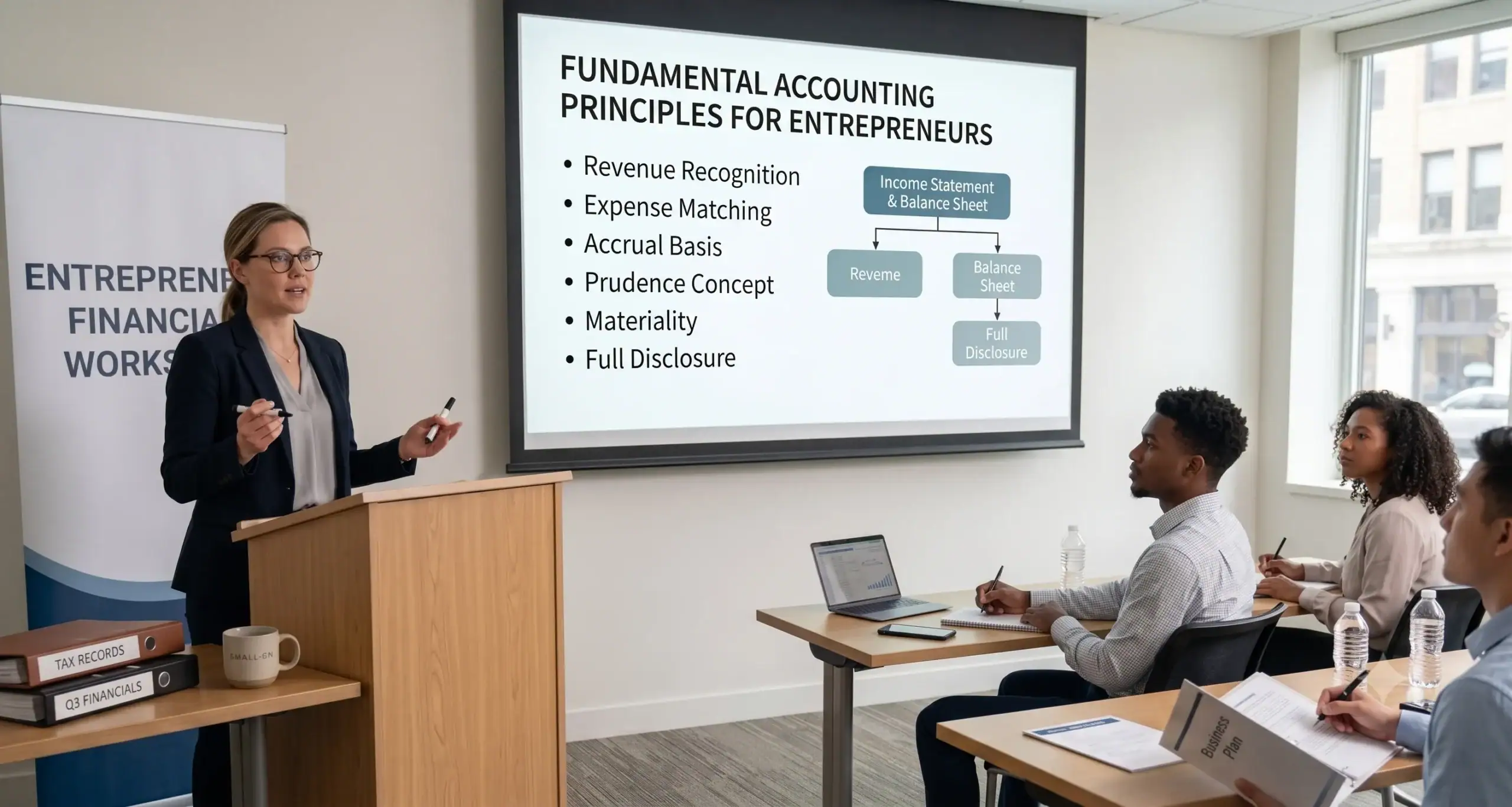
Accounting principles for entrepreneurs are the foundation of building a financially stable and scalable business. They help business owners understand where money comes from, where it goes, and how to plan for growth and taxes. Without these principles, entrepreneurs often struggle with cash flow issues, inaccurate reporting, and poor financial decisions that can limit long-term success.
At its core, accounting principles for entrepreneurs guide how financial transactions are recorded, summarized, and interpreted. This includes understanding income, expenses, assets, and liabilities in a structured way. For startups and small businesses, mastering these principles is essential for tax compliance, financial clarity, and sustainable growth.
Accounting Principles For Entrepreneurs Explained
Accounting principles for entrepreneurs refer to the standard rules and concepts that guide financial recording and reporting. These principles ensure consistency, accuracy, and transparency in business finances, making it easier to track performance and prepare for taxes.
Common accounting concepts for beginners include the principle of consistency, matching expenses with revenue, and recognizing income in the correct period. These principles also form the foundation of GAAP basics for small businesses, which help maintain standardized reporting.
Key accounting rules for business owners include:
- Always record every transaction, no matter how small
- Separate personal and business finances
- Track income and expenses in real time
- Maintain organized financial statements for small business reporting
- Use a consistent method of accounting across all periods
Understanding these rules helps entrepreneurs avoid financial confusion and improve decision-making.
Why Accounting Principles For Entrepreneurs Matter For Business Growth
The importance of accounting principles for entrepreneurs goes beyond bookkeeping. They directly impact profitability, tax readiness, and business sustainability.
When entrepreneurs apply accounting fundamentals correctly, they gain a clear picture of their financial health. This helps them make informed decisions about hiring, pricing, and expansion.
Benefits Of Strong Accounting Foundations
- Improved cash flow management for startups
- Better tax preparation basics for entrepreneurs
- Accurate tracking of business expenses
- Clear visibility into profits and losses
- Easier financial planning and forecasting
These advantages support long-term business stability and reduce financial risks.
Cash Vs Accrual Accounting Methods
One of the essential accounting principles for startups is understanding accrual vs cash accounting. These two methods determine when income and expenses are recorded.
| Accounting Method | How It Works | Best For | Advantages |
| Cash Accounting | Records transactions when cash is received or paid | Small businesses and freelancers | Simple, easy to manage |
| Accrual Accounting | Records income and expenses when earned or incurred | Growing businesses and corporations | More accurate financial picture |
Choosing the right method depends on business size, complexity, and reporting needs. Many entrepreneurs start with cash accounting and later transition to accrual accounting as they grow.
Essential Accounting Rules For Business Owners
Understanding essential accounting principles for startups helps business owners maintain control over their finances. These rules form the backbone of financial management and reporting.
- Record all income and expenses accurately and consistently
- Use the double-entry accounting system explained for balanced books
- Keep receipts and documentation for all transactions
- Reconcile bank statements regularly
- Separate business accounts from personal finances
- Monitor cash flow to avoid liquidity issues
These practices ensure accuracy and support better financial decision-making for entrepreneurs.
Financial Statements And How To Read Them
Financial statements for a small business provide a snapshot of business performance. Entrepreneurs must understand how to interpret these reports to manage operations effectively.
| Financial Statement | Purpose | Key Information |
| Income Statement | Shows profitability over time | Revenue, expenses, net profit |
| Balance Sheet | Shows financial position | Assets, liabilities, equity |
| Cash Flow Statement | Tracks money movement | Cash inflows and outflows |
Understanding how to read financial reports helps entrepreneurs evaluate performance and identify areas for improvement.
Bookkeeping Vs Accounting Principles Explained
Many beginners confuse bookkeeping and accounting principles. While they are closely related, they serve different purposes in business financial management.
| Category | Bookkeeping | Accounting Principles |
| Focus | Recording transactions | Interpreting financial data |
| Role | Data entry and organization | Financial analysis and reporting |
| Outcome | Organized financial records | Strategic business insights |
Bookkeeping ensures accurate data collection, while accounting principles help interpret that data for decision-making.
How Entrepreneurs Manage Finances And Tax Preparation Tips
Managing finances effectively requires discipline and consistent processes. Entrepreneurs must focus on both daily tracking and long-term planning.
Practical Financial Management Tips
- Track all business expenses properly using digital tools
- Maintain updated financial records weekly or monthly
- Plan taxes early to avoid penalties and surprises
- Monitor cash flow regularly to ensure business stability
- Separate short-term spending from long-term investments
Proper financial discipline improves tax readiness and reduces year-end stress. It also ensures entrepreneurs are prepared for audits and financial reviews.
Partnering With A Strategic Accounting And Tax Advisory Team
Working with a professional advisory team can help entrepreneurs apply accounting principles for entrepreneurs more effectively. A structured financial partner provides guidance on compliance, tax planning, and business growth strategies.
A specialized firm like Paragon Accounting and Tax Solutions focuses on helping small business owners move beyond basic compliance. Instead of only handling tax filing, they emphasize real-time financial clarity, profit-driven planning, and structured money management systems. This approach helps entrepreneurs make smarter decisions and build sustainable businesses.
Their support often includes financial reporting, tax strategy, and advisory services designed to improve profitability and long-term stability.
Building Strong Financial Foundations For Long-Term Growth
Mastering accounting principles for entrepreneurs is essential for building a profitable and sustainable business. These principles provide clarity on financial performance, improve decision-making, and ensure compliance with tax regulations.
By understanding basic accounting principles for small business owners and applying structured financial systems, entrepreneurs can avoid common mistakes and create a stronger financial future. Whether managing startups or growing enterprises, strong accounting fundamentals support smarter planning, better cash flow control, and long-term business success.
FAQs
What Are Accounting Principles For Entrepreneurs?
They are standard rules that guide how business transactions are recorded, summarized, and analyzed to ensure accurate financial reporting.
Why Are Accounting Principles Important For Small Businesses?
They help maintain financial accuracy, improve cash flow management, and ensure proper tax preparation and compliance.
What Is The Difference Between Cash And Accrual Accounting?
Cash accounting records transactions when money is exchanged, while accrual accounting records them when they are earned or incurred.
How Do Entrepreneurs Track Business Expenses Properly?
They should record every expense immediately, categorize spending, and use accounting tools or software for accuracy.
What Financial Statements Should Every Entrepreneur Know?
The income statement, balance sheet, and cash flow statement are essential for understanding business performance.